While the U.S. Celebrates its Founding, San Francisco Celebrates Overlapping Anniversaries of its Patron Saint and of the City Named for Him. But First, Some History.

For a summary of the upcoming events discussed in the included interview with Archbishop Cordileone, see the table at the end of this article.
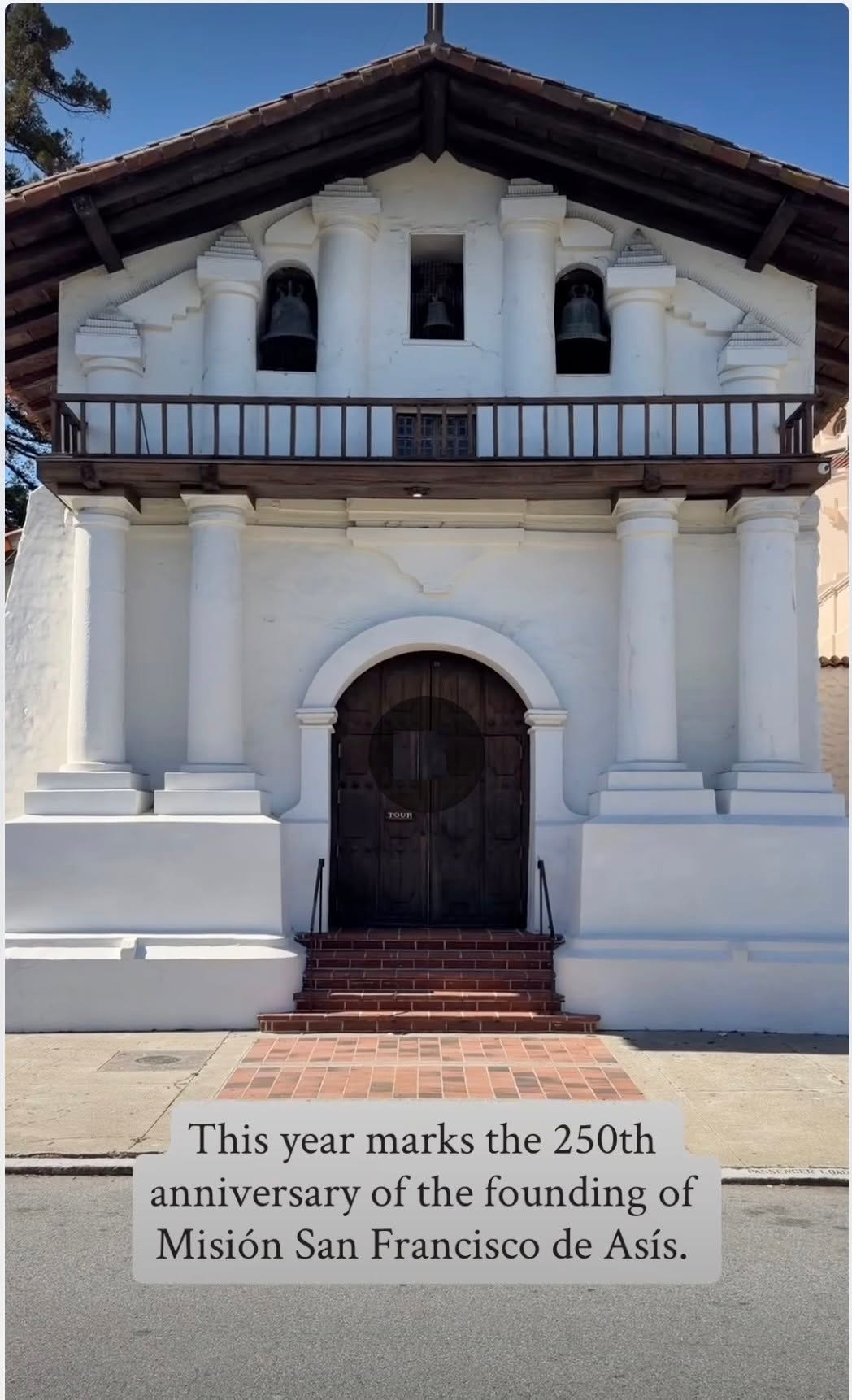
While the United States celebrates its 250th anniversary this year, San Francisco is also celebrating the 250th anniversary of the founding of Mission San Francisco and of the city that grew up around the mission and that now bears its name.
These words spoken by former Governor Jerry Brown to an audience of Latino/Hispanic civil rights and political leaders, in 1976, during the bicentennial celebration of the founding of the US, still apply fifty years later:
“I share your concern that so little attention has been given to the Spanish and Mexican heritage of California. As we recall the achievements of Jefferson and Franklin and the other founding fathers in this bicentennial year, we should not ignore the contributions of De Anza, the Franciscans, and those bold explorers who pioneered California. They are our founding fathers.’”
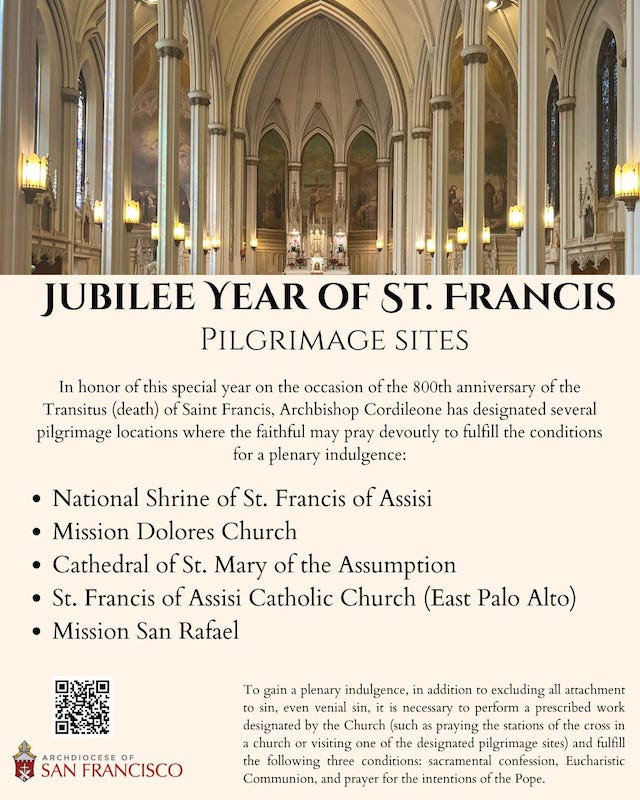
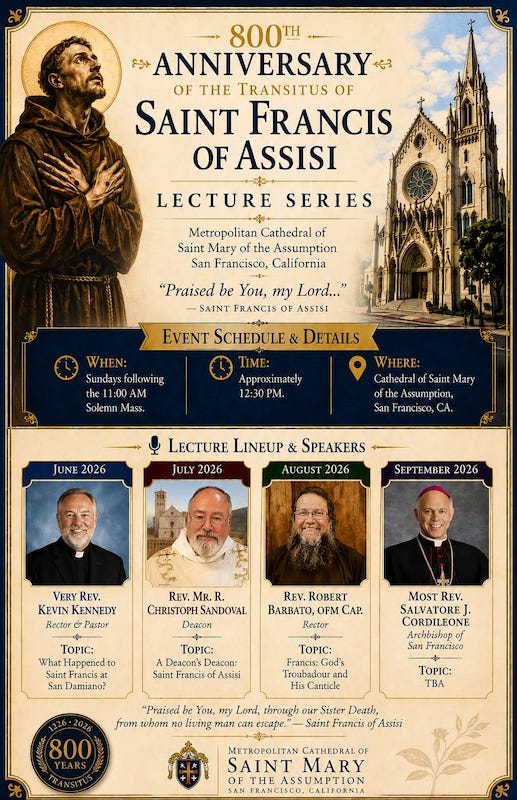
This year, the Church is also commemorating the 800th anniversary of the transitus (death) of Saint Francis of Assisi, the much-loved patron of the Mission, the city, and the archdiocese. Pope Leo XIV has declared a worldwide Jubilee Year of Saint Francis.
For this post about these overlapping anniversaries, I briefly interviewed His Excellency Salvatore Cordileone and talked with others organizing the events the Archdiocese is planning to celebrate.
Before we get to more details about the celebrations, the following sections describe some fascinating, sometimes little-known, parts of the history I’ve researched that put the founding of San Francisco in a wider historical context.
The Goal of the California Missions
How Saint Francis Got the Go Ahead for His Mission
The Expedition a Mile Long and a Quarter Mile Wide
The Normalization of Racial Mixing
Interview with San Francisco Archbishop Salvatore Cordileone
Saint Francis Anniversary Events in San Francisco
The Goal of the California Missions
In the middle of the 18th century, Mexico and large parts of the territory that is now part of the United States were part of New Spain and had been under Spanish rule for over two hundred years. Spain had not yet colonized the upper part of the Californias. That changed when the Spanish Crown, fearing encroachment by Russian interests and a distant possibility of competition from England, decided to protect Spanish claims to the portion of Alta (upper) California that is now the state of California by establishing missions protected by presidios. (As you may or may not know, presidio means protection.)
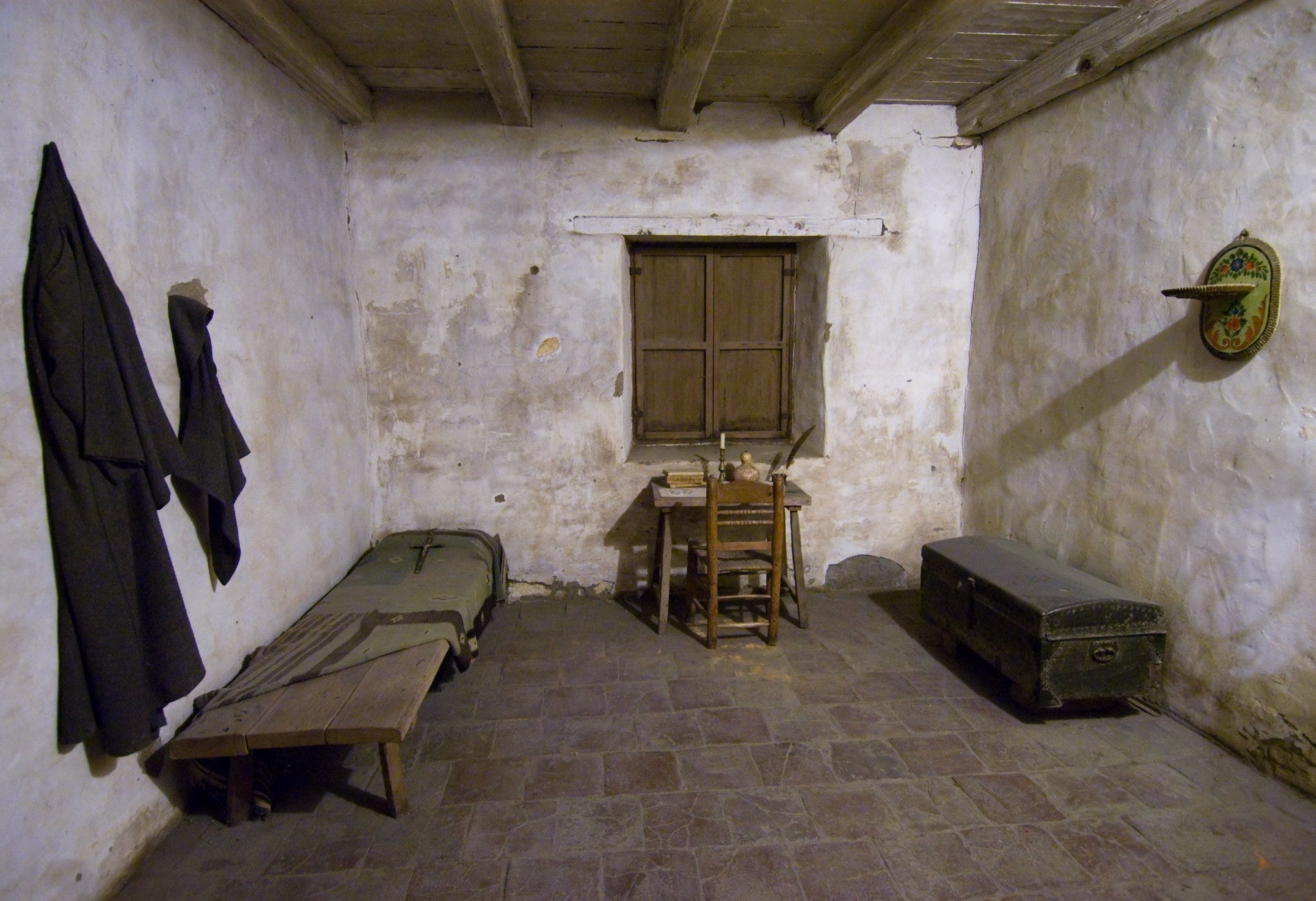
Many believed colonizing Alta California would bring great wealth to Spain, as had happened in other areas of the New World. But, as it turned out, the colonizing effort in Alta California always ran at a deficit. This is a good thing to keep in mind if you hear propaganda about how the missions enriched Spain. And if you visit any of the missions and view the friars’ living quarters, you will be able to refer to the picture in your mind’s eye of how frugally the friars lived if you hear someone lying about how the missions enriched the missionaries. Here, for example, is a photo I took of Saint Junipero Serra’s cell at Mission Carmel.
Conversion of the natives of this area, who had not yet been exposed to Catholicism, was another major goal of Spain1. The sincere goal of the missionaries and of most, if not all, of the military men who accompanied them was to bring the Gospel of Jesus Christ, monogamous family life, forgiveness of enemies, along with farming, ranching, clothing, the construction of permanent shelters, architecture, the arts, and other blessings of civilization to the natives.
Many Spaniards donated to a Pious Fund for the New World missions. In those days, evangelization hadn’t been twisted into a bad word. Catholics took the New Testament seriously. Some of us still do. We remember that just before Jesus ascended to heaven, He gave His apostles the commission to evangelize, which is described at the end of the Gospel of Saint Mark—which is often called by Protestants, The Great Commission.
Matthew 28:16,18-20a
Now the eleven disciples went to Galilee, to the mountain to which Jesus had directed them. And Jesus came and said to them, “All authority in heaven and on earth has been given to me. Go therefore and make disciples of all nations, baptizing them in the name of the Father and of the Son and of the Holy Spirit and teaching them to obey everything that I have commanded you.”
Not all Catholics are called to be missionaries to faraway places, although out of love and concern for everyone’s salvation, we need to share the message of Christ with those around us. If you cannot go yourself, you can fulfill Christ’s commission by supporting others who are called to evangelize the world.
The overall plan was to eventually make the native people self-sufficient citizens of Spain and citizens of heaven and to turn over the mission lands to them when they were ready. But after the missions were secularized by Mexico after their revolution, the converted residents of the missions were abandoned, the lands and goods that were rightfully theirs were distributed mostly to Mexicans, and the lands were later overrun by settlers from the United States. The few native Americans who received mission lands were swindled out of their holdings. What a shameful end to a flawed but spiritually motivated endeavor based on great personal sacrifice and love.
How Saint Francis Got the Go Ahead for His Mission
The future Saint Junípero Serra was the president and spiritual leader of the northern California missions. He was an OFM, a Franciscan of the Order of Friars Minor, and he was eager to see a mission named for his order’s founder.
In 1768, José de Galvez, Inspector General of New Spain, presented Father Serra with a list of missions to be founded, with saints’ names already assigned to each. Serra said, "Sir, is there to be no Mission for our Father Saint Francis?" To which Galvez replied, "If Saint Francis wants a Mission, let him cause his port to be discovered and a Mission for him shall be placed there."
I wondered what Galvez could have meant when he referred to “his port.” The phrase seems to mean a port named for Saint Francis already existed somewhere in the California mission territory, but nobody knew exactly where it was.
It took a bit of research, but I discovered my understanding is correct. A bay that had been discovered almost 200 years earlier was named La Bahia de San Francisco on a map by a Portuguese explorer named Sebastian Cermeño. He had been sent by the King of Spain in 1595 to find a safe harbor as a stopping point for the many galleons carrying trade goods from the Philippines to Acapulco. The galleons’ progress in the difficult-to-navigate waters required them to use the currents prevailing at a certain time of year to cross the not-Pacific Ocean and then sail south along the California coast.
Exploration of the coast of California was hampered by contrary winds and rough seas, sailing close to the coastline resulted in many shipwrecks, and expeditions were expensive, so no exploratory expeditions were launched to follow up on the port named by Cermeño.
The opening to what is now called San Francisco Bay was not discovered until 1774 during a land expedition led by Captain Juan Bautista de Anza. This land expedition was immensely significant to the mission effort because it proved that it was possible to get to Alta California, even though it meant crossing barren deserts and rivers. This made it possible to send supplies to the missions by land, and so it enabled the settlement of San Francisco. Sending supplies or settlers by sea was risky because of the above-mentioned dangers of sailing the Pacific.
At the same time as the first Anza expedition, the British subjects in the 13 colonies were defying British authority. Most of us know about the East Coast founding of the US, but the thirteen colonies represented only part of the story of America’s origins, and few know about the founding of the Spanish colonies.
San Francisco Bay turned out to be about fifty miles south of the bay marked on Cermeño’s map, which, most historians agree, is now what we know as Drake’s Bay. Drake’s Bay was first discovered in 1579 by Sir Francis Drake, the privateering adventurer of whom Queen Elizabeth was a secret investor.
It wasn’t until five missions had been founded under Serra’s direction that he was able to oversee the founding of a mission named La Misión de Nuestro Padre San Francisco de Asís (The Mission of Our Father Saint Francis de Assisi).
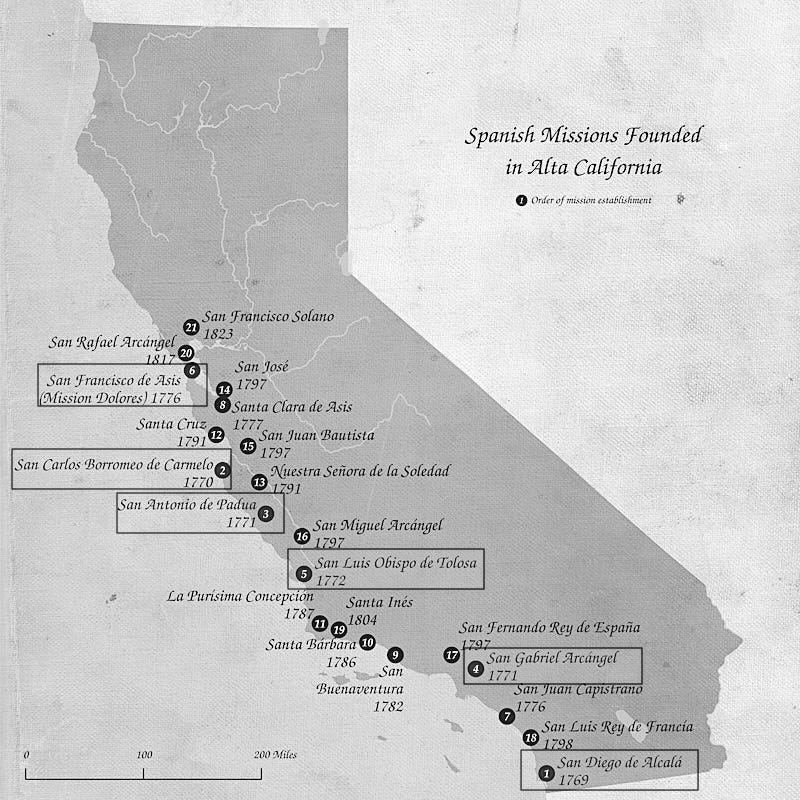
Later, the mission became popularly known as Mission Dolores because of its location at a creek named for the seven sorrows (dolores) of the Blessed Virgin Mary. Later, after a mission to another Saint Francis (of Solano) was established at the northernmost location of the California mission chain, “Dolores” became the shorthand name for the San Francisco mission because of its location.
The city that grew up around the mission was known as Yerba Buena (Good Herb, for a tea that grew there). In 1847, the city became San Francisco.
The Expedition a Mile Long and a Quarter Mile Wide
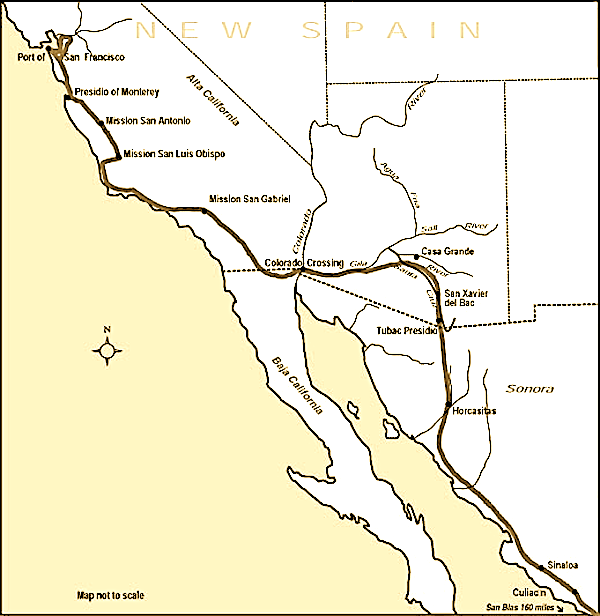
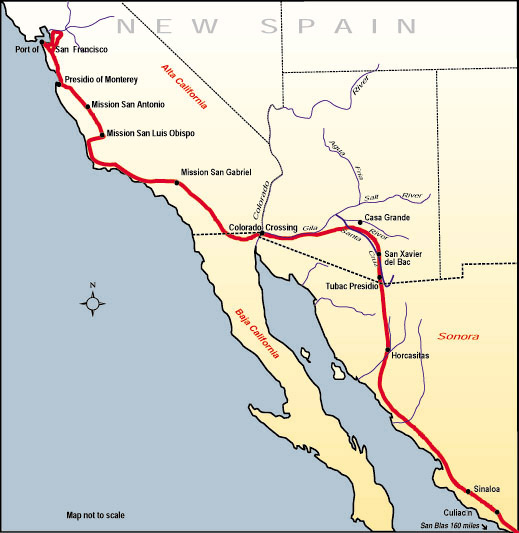
In January of 1776, Captain Anza led a second expedition with Father Pedro Font, by land and sea, over 1,200 miles from Sonora, Mexico, to settle the port of San Francisco and establish the mission. Three supply ships carried goods for the missions. One of the ships and all of its crew were lost soon after the ship was launched and never heard from again. The other two ships were blown off course by winds, making the voyages last far longer than planned, and most of the sailors died of scurvy from lack of foods containing vitamin C.
The land expedition that settled San Francisco took no wagons because the route they were taking had no roads. Everyone either walked or rode horseback on their five-and-a-half-month trek from the gathering place in Tubac. Some had already traveled hundreds of miles to get to the gathering point at Tubac.
Many, if not all, of the soldiers were there under duress, according to this author:
“Overruling the Franciscans' appeal for clemency for miscreant soldiers, Gálvez punished most of them by assigning them to the upcoming expedition to Alta California — and discharged the rest from military service.[—The Life and Times of Fray Junípero Serra: The Man Who Never Turned Back, by Maynard Geiger.
The expedition included one hundred and forty people, mostly families of the soldiers, in addition to seven non-military families. One hundred and fifty-five of the colonists who walked or rode horseback throughout the grueling journey were women and children. In addition, there were fifteen muleteers, three cowboys, seven servants, five Indian interpreters, and a commisary.
Reading through this list of colonists is revelatory. The families were generally large. Two families were traveling with nine children each! Some families included young teenage daughters who were already married, and one of the married girls was shockingly only 13 years old. A teenage brother and sister traveled without relatives, and a newly-widowed mother traveled on her own with her four-year-old and one-year-old daughters.

All while riding horseback. Most of the mothers were nursing babies or wrangling toddlers, or doing both. Three new babies were born during the trip, and some women lost their babies to miscarriage.
Despite the dangers they overcame, after fording the rivers, crossing deserts, and forging their way through dense thickets, suffering along the way from heat and snow, dust and winds, and frequent hunger and thirst, there was only one death: a mother who died after childbirth on the first day of the trip.
Her name was Maria Ygnacia Manuela Peñuelas. She and her husband, Vicente Feliz, were both of mixed Spanish and native Mexican blood. Her husband had come from a prosperous family whose hacienda was destroyed in fighting between native Mexicans and the Spanish. The couple had joined the expedition with their six children in Tubac, after traveling 500 miles through the Sonoran Desert to meet at the gathering point, so they were already used to hard traveling. Unfortunately, worse hardship was ahead of them with the loss of the mother after a breech birth at the end of the first day’s journey.
Father Pedro Font wrote in his diary (quoted here) about Maria’s death and burial. Her healthy baby boy was baptized the same day she was buried, and the next day Father Font married three of the couples in the company who had requested it.
The impoverished settlers were equipped with clothing, livestock, tools, seeds for planting, and food (although food sometimes was scarce). They were given protection by the military and the sacramental help of the missionaries, and they were promised plots of land. The dream of a better life was a big inducement to take the risks of joining the expedition, even though the destination was an isolated outpost of the Spanish empire where not many were willing to go.
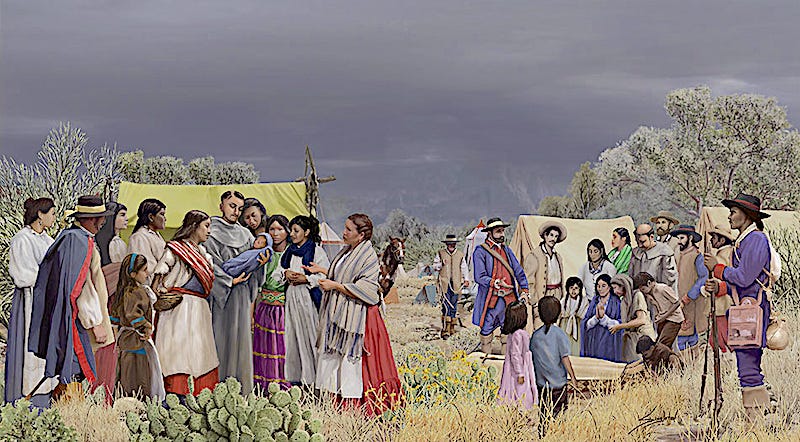
They traveled with a herd of three hundred and forty horses, one hundred and sixty-five pack mules, and about three hundred and two Longhorn bulls and cows.
The pack mules began the journey from Tubac carrying six tons of flour, salt, beans, sugar, chocolate, and cornmeal. . . . Additionally, there was another ton of cooking utensils, ammunition, hardware tools, and horseshoes. Then another ton of tents, clothing, shoes, and blankets. These intrepid souls would pack and unpack all this every day until they reached their destination. Breaking camp each morning took about 2 hours. Once underway, the procession was a mile long and a quarter mile wide. … [By the time they arrived in Monterey] [t]hey had walked 158 days from Tubac, enduring thirst, sandstorms, cactus thorns, dense thickets, injury, sickness, and extreme fatigue.—From “The Second Anza Expedition: Journey of a Lifetime!” at the Southern Arizona.Guide.com.
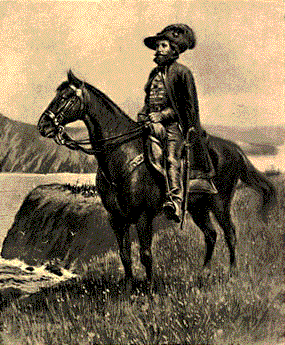
Anza showed admirable leadership skills and resourcefulness in how he shepherded that teeming crowd of men, women, children, and livestock, planning each day’s route in consideration of the availability of water and cooking fuel for the settlers, and forage for the livestock along the way. Besides the tons of food they brought, their diet was sometimes supplemented by game, such as abundant elk and antelope, and an occasional bear. Friendly natives, almost all of whom had never seen a European before, often generously shared beans, maize, squash, seeds, fish, and whatever other food they had with the newcomers.
The Normalization of Racial Mixing
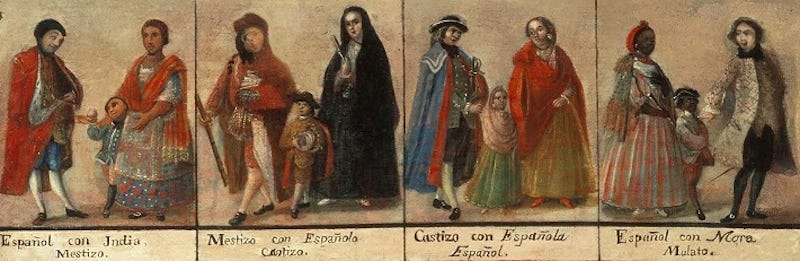
By 1776, intermarriage between the natives and Spanish had already been going on in Mexico for over two hundred years. Although the commanders of the expeditions to colonize San Francisco (and other missions) were of Spanish blood, you might be surprised, as I was, to learn that the soldiers and their families (who made up most of the settlers) were of mixed race African, indigenous, and Spanish ancestry. Almost all of the Californios who were descended from the original settlers of California were Meszitos. Spanish colonizing efforts did not result in a society ruled by a master race of Spaniards, it created a blended population.
The people with African blood were descendants of Africans who were brought to Mexico as slaves during the previous centuries, and who were later freed.
Even though a class system held the white Spanish in the highest esteem, in the new settlements under Spanish rule, people of mixed blood were able to rise in society and better themselves without legal restrictions and with fewer societal restrictions.
Notably, some of the earliest and most prosperous residents of the eventual city of San Francisco were of African descent, until the Americans took over, and racial exclusion was enforced. But that’s a whole other story.
More About the Founding of Mission San Francisco
The land expedition was delayed at Monterey, where five years earlier, in 1770, a presidio had been built, and the Mision San Carlos Borromeo del Río Nuestra Señora del Monte Carmel (Mission St. Charles Borromeo of the River of Our Lady of Mount Carmel) had been founded nearby. The mission’s name was eventually shortened to Mission Carmel, and it became Junípero Serra’s headquarters.
The Anza expedition was delayed while awaiting permission from the military governor of California, Captain Fernando Rivera, who disagreed with Anza and Serra over where to locate Mission San Francisco.
In March 1776, Anza took a small troop, along with Father Font and Lieutenant Juan Moraga, to scout locations in the San Francisco Bay Area, leaving the rest of the expedition in Monterey. The explorers picked a spot near the opening of San Francisco Bay for the presidio, and on March 28, Father Font celebrated the first Mass in the area at Mountain Lake. On March 29, the Friday of the Sorrows of the Blessed Virgin, they selected a creek, which they named Arroyo de Nuestra Señora de los Dolores, as the location for the Mission.
Father Font, diarist for the exploratory expedition, wrote "...although in my travels I saw very good sites and beautiful country, I saw none which pleased me so much as this. And I think it could be well settled like Europe there would not be anything more beautiful in all the world, for it has the best advantages for found in it a most beautiful city , with all the conviences desired, by land as well as by sea, with that harbor so remarkable and spacious, in which may be established shipyards, docks, and anything that might be wished.
In June, after their return to Monterey, Moraga organized and led the colonists the rest of the way to San Francisco, along with Father Francisco Palóu and Father Pedro Benito Cambón, despite not yet having official permission to proceed.
Father Francisco Palóu offered the first Mass at the Mission on June 27, 1776, five days before the signing of the Declaration of Independence was signed on the East Coast during the American Revolution.
The families of the soldiers built homes and worked their land at the presidio, while the two Franciscans, along with converted natives from Mexico, built the Mission and began evangelization of the natives in the area.
The San Francisco mission was dedicated with a Mass offered by Father Palou on October 9.
Although Junípero Serra directed the founding, he was not able to visit the San Francisco mission until October 1, 1777. At the time of the founding, he had left his headquarters in Carmel to help restore Mission San Diego, the first Alta California mission that he had founded, after natives had rebelled, burned the mission down, and killed missionary Father Luis Jayme and several others, both of whom forgave their murderers before they died. Typically, Father Serra mercifully intervened with the authorities to prevent those responsible from being persecuted.
.jpg)
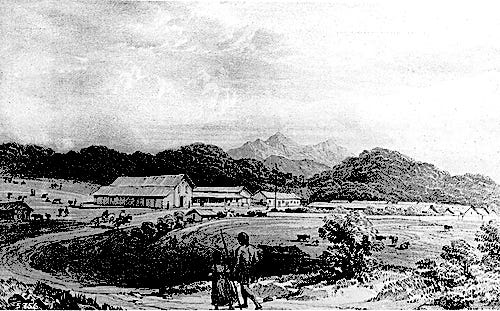
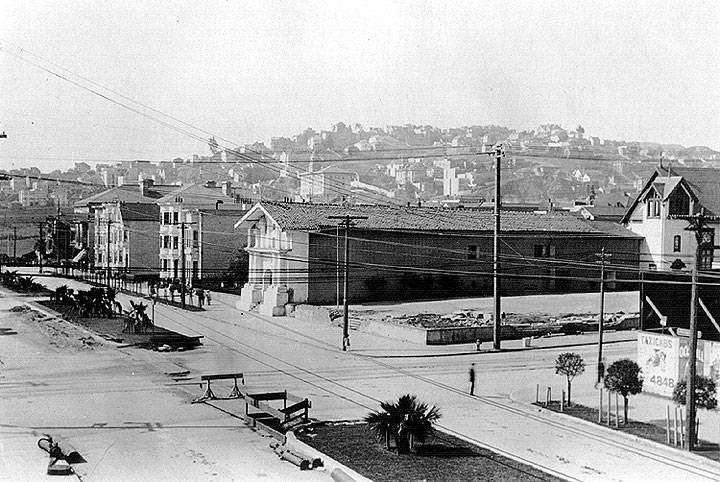
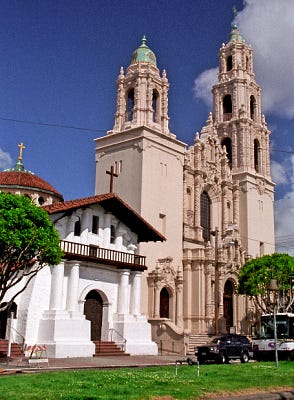
Three mission churches were built before the current one, which was dedicated on August 2, 1791. It is the oldest intact church nave in California and the oldest intact building in San Francisco. It survived the 1906 earthquake, and it remains standing next to the much larger Mission Dolores Basilica, which was built in 1918.
Interview with San Francisco Archbishop Salvatore Cordileone.
I spoke briefly with His Excellency Salvatore J. Cordileone, Archbishop of San Francisco, about how the archdiocese will be observing the overlapping anniversaries.
I mentioned to him that, so far this year, I’ve attended two related events. One was a Solemn Pontifical Latin Mass he celebrated at the National Shrine of Saint Francis on February 20. That Mass was celebrated the day before the remains of Saint Francis were brought out for the first-ever extended public viewing in the Basilica of San Francis in Assisi.
On March 28, Father Joseph Illo, pastor of Star of the Sea Church, celebrated a traditional Latin Mass at Mountain Lake in the Presidio, near his church, at the site where Father Font celebrated Mass during Anza’s scouting expedition.
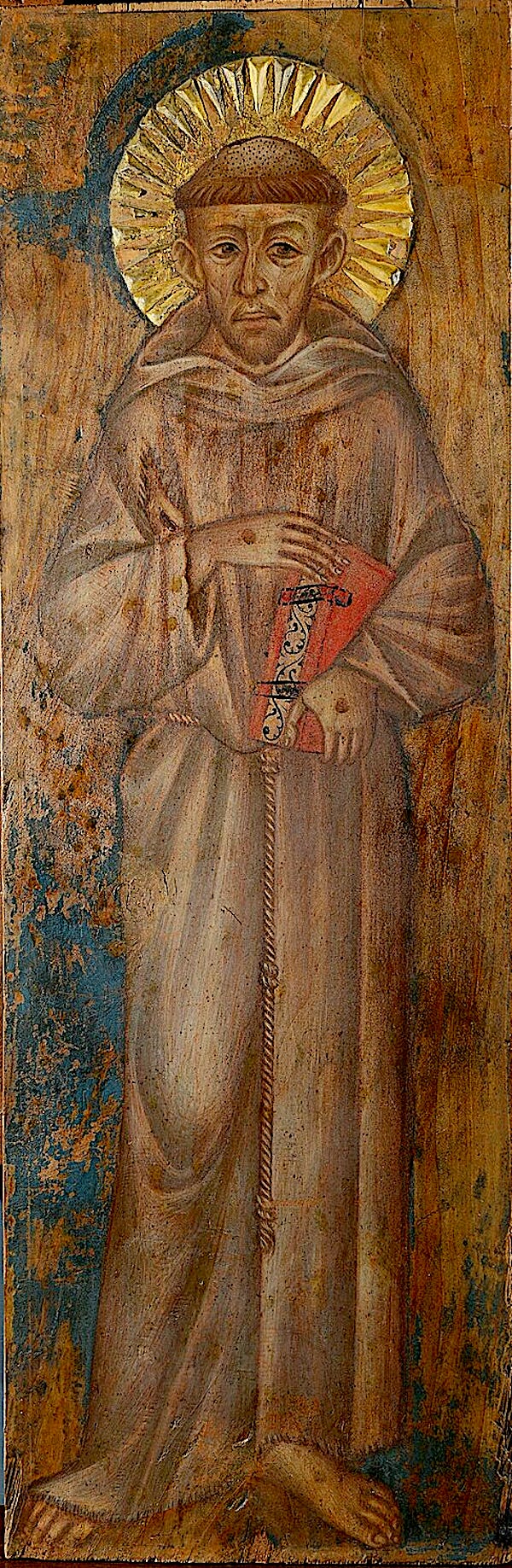
Also, I mentioned in my interview with the archbishop that I heard that prominent San Franciscan, Angela Alioto, and the Archconfraternity of the Knights of Saint Francis, which Alioto founded, is organizing an exhibition with relics and art loaned, for the first time ever, from Assisi, including prayer books and locks of the hair of Saint Francis and Saint Clare. (Think of it, Alioto was able to negotiate the loan of the Cimabue portrait of Saint Francis that was used as the lid of Saint Francis’ coffin. And, as I learned from Deacon Christoph Sandoval in an earlier interview in his office at the Cathedral of Saint Mary of the Assumption, there is an even more precious relic coming to the exhibit that I can’t tell you about yet. Look for a future post about the exhibit.)
RTS: What other events is the archdiocese planning around these anniversaries?
SJC: I should clarify that the Mass celebrated at Mountain Lake was just with the explorers, but the first Mass associated with the founding of San Francisco took place at the mission after the colonists arrived.
The date of the first Mass at the Mission was June 29th, 1776, five days before the signing of the Declaration of Independence.
For our first event, we are going to have a Mass and a reception on June 27th, the Saturday closest to the actual day of the anniversary. That Mass will be celebrated by the Provincial of the Order of Friars Minor, the OFM. Serra and his brother missionaries to California were members of that branch of the Franciscans.
The provincial will celebrate the Mass at Mission Dolores Basilica. The original Mission Church is next door.
In the 1906 earthquake, other buildings associated with the Mission, and a parish church dedicated to St. Francis, which was built much later than the mission, were destroyed. But the mission church remained. It is the first and oldest building in San Francisco that is still standing.
The official founding date of the mission is October 9th. This date is in immediate proximity to the 800th anniversary of Saint Francis’ transitus, so we’re connecting the events. On Saturday, October 4th, the 800th anniversary of his passing, we scheduled a Mass at the National Shrine. The Mass will be said by the Provincial of the Capuchin Franciscans, since the Capuchins have the pastoral care of the National Shrine.
The city started with the founding of the mission, as is the case for so many other cities here in California that are named for their missions. So, on the actual day of its founding, Friday, October 9th, we’ll have a public Thanksgiving prayer service at Mission Dolores. This will be open to the wider community, with civic officials and representatives of different faiths, so it’s a broader sort of celebration of San Francisco’s birthday.
Then, on October 10, the next day, we’ll have a Mass, again in Mission Dolores Basilica, with Missi Sancti Junípero Serra, a Mass setting composed by Frank La Rocca, the composer-in-residence of our Benedict XVI Institute.
La Rocca first composed this Mass at my request three years ago as a traditional form Mass, and I celebrate it as a Solemn Pontifical Mass, which is the form of the Mass that the missionaries celebrated.
Details are still being finalized for some of these events. Check before you go for possible changes here and here.
Saint Francis Anniversary Events in San Francisco
October 4, 2026: 11: 00 a.m. Mass at the National Shrine of Saint Francis, 610 Vallejo St, San Francisco, CA 94133, observing the 800th death anniversary of Saint Francis of Assisi. Celebrant: Br. Joseph Seraphin Dederick, OFM Cap, Provincial of the Capuchin Friars.
October 9, 2026: 12:00 noon Prayer Service of Thanksgiving to celebrate the city’s founding, in Mission Dolores Basilica, bringing together local faith and civic leaders. Open to the community.
October 10, 2026: Mass at 11:00 a.m. at Mission Dolores Basilica, observing the October 9 anniversary of the Mission’s founding. With Missi Sancti Junipero Junípero Serra by Frank La Rocca.
October 16—November 28, 2026: 800th Year Jubilee Events and a rare exhibition of relics of Saints Francis and Clare and of artwork from Assisi, at the Cathedral of Saint Mary of the Assumption, 1111 Gough Street, San Francisco 94109.
“Mission Dolores Historical Essay” by Br. Guire Cleary, S.S.F. in WHY THE MISSIONS WERE FOUNDED, is quoted here:
MISSION SAN FRANCISCO—GOALS AND PURPOSES OF THE MISSIONS
Fray Junípero Serra was a philosopher of the school of John Dun Scotus who believed that God is love and that this love is manifested within communities and relationships. The effort of missionization was to create Christian communities where God would be revealed. Central to the goals of the Franciscans at Mission Dolores was the idea of ingathering of native peoples into villages (reducion), inculcation of Christian doctrine and morality, and European cultural values, establishment of Spanish law and government, and the creation of townships of Hispanicized farmers and artisans out of the indigenous population. Spanish law guaranteed that Indian tribes entering the mission system would have their lands preserved intact under the management of the mission padres. The intention was to have self-governing pueblos in place within 10 years. This was the plan and hope of missionization: that Indians would be attracted by European technology and culture and, establishing their homes near missions, would ultimately accept Christianity and Spanish rule.
This gives a fair and balanced statement of the factors that went into the founding of the missions.