Mother's Day, Plus One
Some memories of my mother's spunk

Sunday was Mother’s Day, and my mother came up in a text conversation I was having with my friend, Elaine McDonough. In the 1980s, Elaine and I had met at the University of Minnesota in Minneapolis while we were both taking graduate-level American Studies classes. Like me, Elaine grew up in the Boston area. I hadn’t lived there for decades. She had graduated from Wellesley a few years before I met her, so her East Coast experience was fresher than mine. We were drawn to each other partly because we both were nostalgic for Massachusetts. It may seem odd, but a few times when we first got together, we alternated in reciting a litany of Boston street names: Commonwealth Avenue, Beacon Street, Washington Street, Boylston Street, Dartmouth Street, Tremont Street, . . . Ah, memories.
I moved from Minnesota in 1989. Elaine stayed.
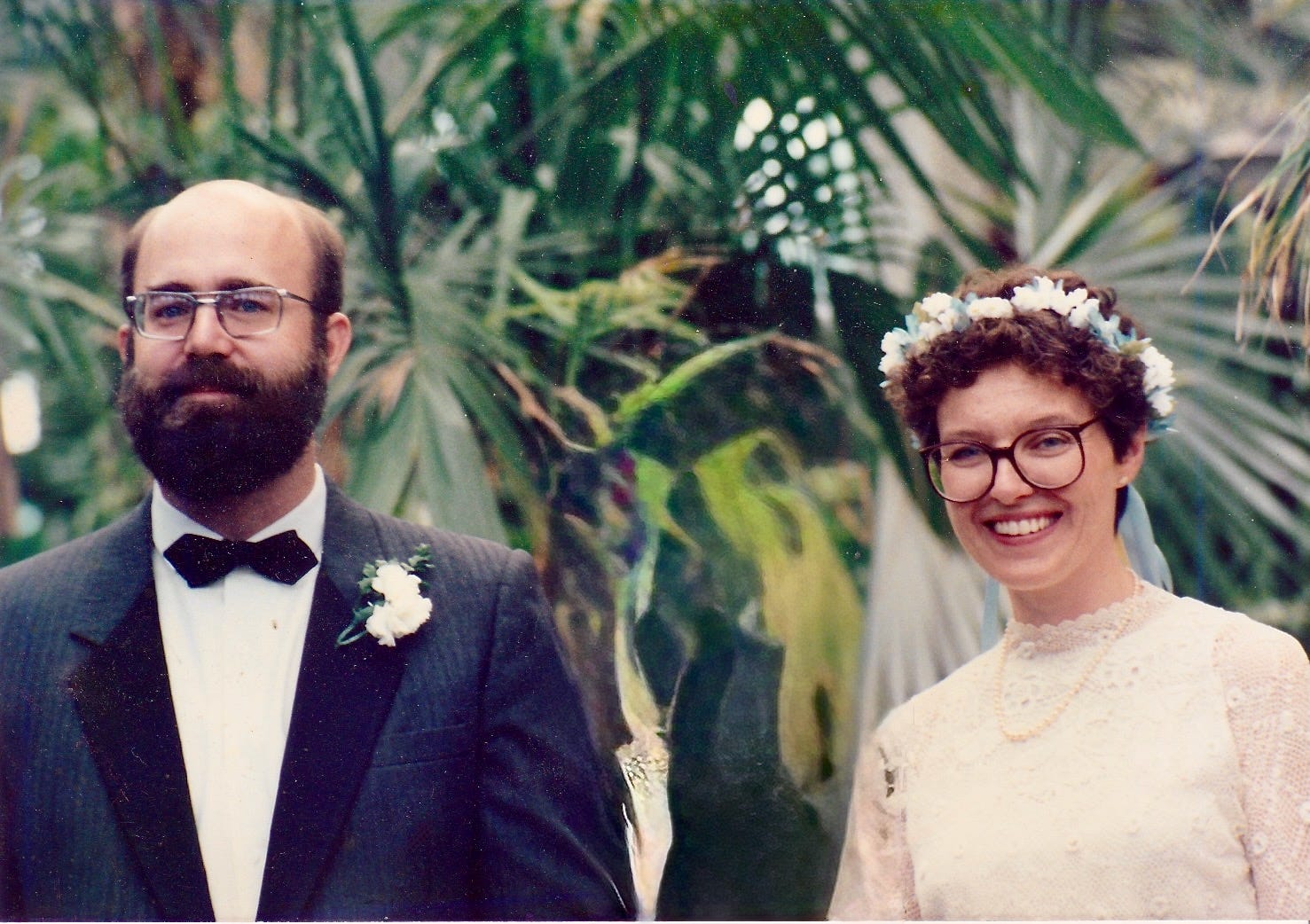
After Elaine graduated, she went native, married a local guy, Larry Kjehldahl, had two children, and now lives in Mahotemdi, a suburb of St. Paul. She couldn’t find a professional job with her American Studies degree, so she took more courses so she could be a special education teacher.
It’s been a long time since Elaine and I chatted. Usually, the way we keep in touch is to buck the trend away from handwritten communications, and we send each other postcards every few months, of something literary, witty, or artistically interesting.
While we were texting last Sunday, I told Elaine that I had just exhibited some of my art at a Marian art exhibit in San Francisco, and I showed her a few photos.


I then mentioned that I’ve noticed my face has changed a lot in the past year, and that I see myself looking more and more like my mother, whom she probably would remember, since my mom came to live with my children and me when Elaine and I were in grad school.
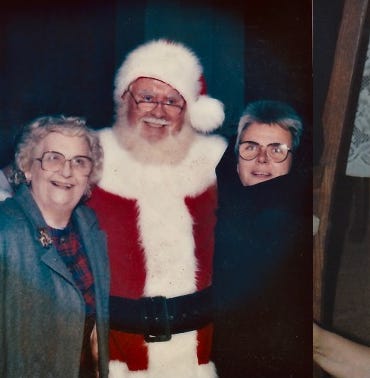
Elaine told me she remembered my mother’s spunk more than her face.
Come to think of it, I remember my mother’s spunk, too.
After my mother had kidney failure and then a stroke, when she was 76, and I was 50, her doctor used to routinely come around to her room in the Fairview Riverside rehabilitation center and try to talk her into dying. But she wasn’t having it. I was in her room several times when he tried to get her to agree to stop dialysis. The “right to refuse treatment” was a popular slogan then about a change in medical practice being championed at the time. It was a good change in that it allowed patients to say no to treatments designed to prolong life at any cost.
But then the health care establishment was not so subtly turning the idea that patients have a “right to refuse treatment” into an “obligation to refuse treatment.” Her doctor pretended to sympathize with her, telling her he understood she wouldn’t want to be a burden to her family. He didn’t realize she wasn’t that kind of mother. He assured her that once she stopped getting dialysis, kidney failure wouldn’t be a bad way to die.
He’d bring a nurse practitioner along with him who would chime in about my mother’s poor quality of life, since mummy was paralyzed on the left side of her body from the stroke and needed dialysis five times a week. The NP thought she was making a reasonable argument that my mother should give up on life when she told us she personally wouldn’t want to go on living if she couldn’t climb mountains. After they’d leave, we’d talk about the stupid things they said. We started calling him Dr. Death and laughed together at the abelist ideas of the NP. Even though the word abelist wasn’t being used in 1994, the assumption was clearly that if your life isn’t what you want it to be, or if you may be a burden to others, then you should put an end to yourself.
That way of thinking is even more prevalent now. I recently read about a woman in her seventies who went into an emergency room with hip pain, and without even being examined, she was offered euthanasia—which they call assistance in dying. It’s cheaper for the insurers that way.
How many people would be left alive in the world if they stopped living because they couldn’t climb mountains anymore? Even back then, my mountain climbing days were over, and I was only 50.
Dr. Death and his NP didn’t realize my mother was not one of those Minnesota-nice Scandinavian ladies who never want to be a bother to anyone.
My mother was a feisty Hungarian-American, born in Cleveland in 1918, and she believed you should fight death to the death.
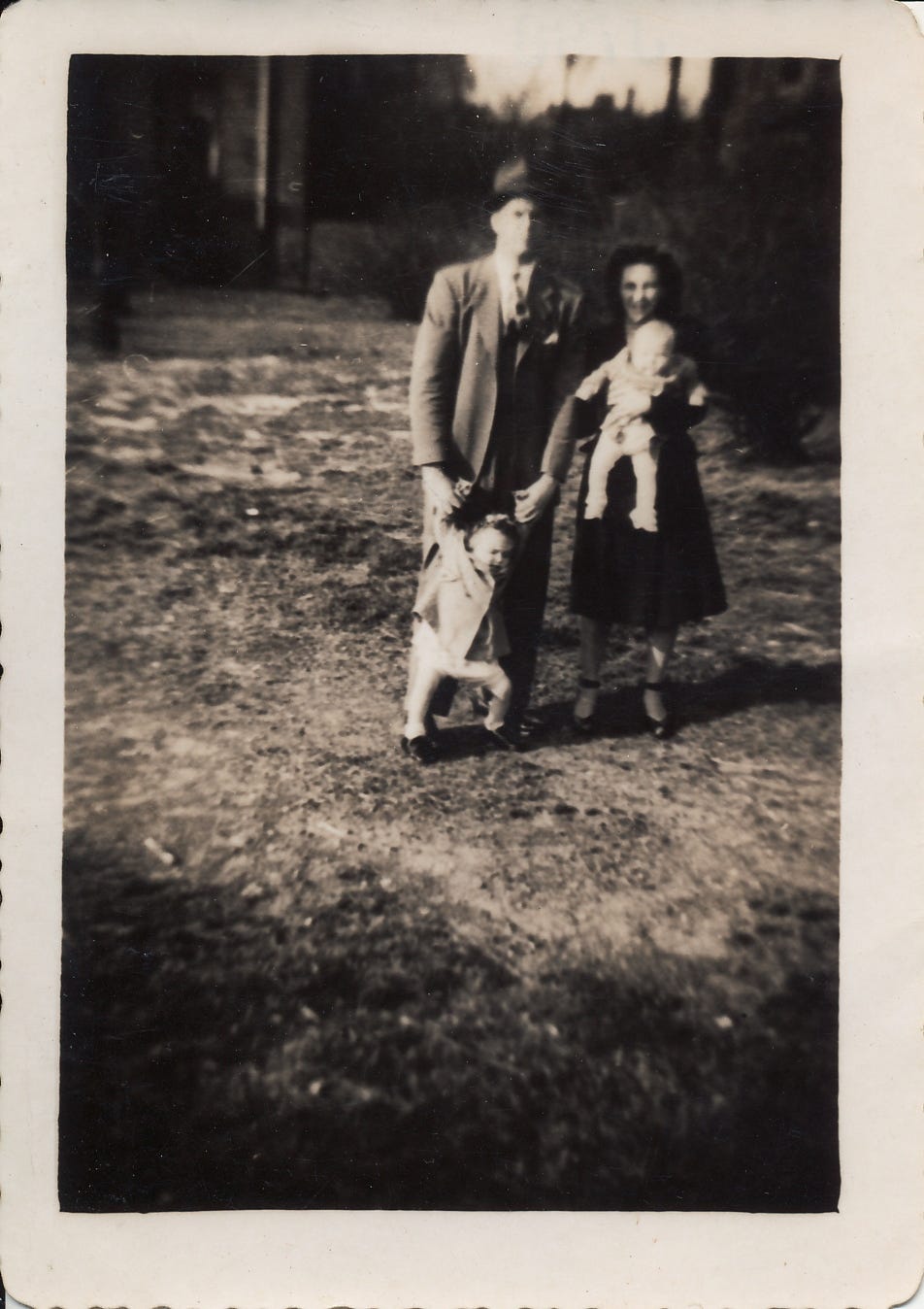
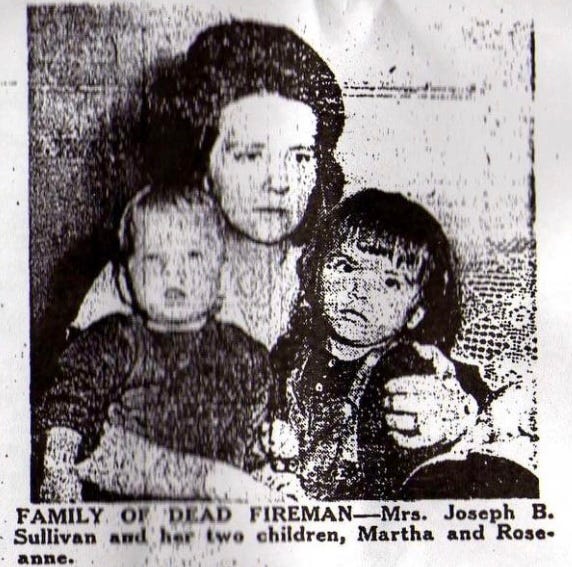
She had a tough and lonely life. After my father died in a firetruck accident and left her with a two-year-old, a one-year-old, and a baby in the womb, she had raised us three girls by herself alone.
When we got bigger and started going to school, she began to work outside the home. Women’s opportunities for work were restricted, but she grabbed every opportunity. She took up sales, Avon, and Stanley Home Products, and she bought us a nice home. After we left home, she became the first woman to sell insurance in Massachusetts for the Metropolitan Life Insurance Company. And she later got a real estate license.
The reason she was in Minnesota when I was in grad school there was that she came to live with me when she couldn’t work anymore.
After the conversation ended with Elaine, I remembered what had led up to that campaign to get my mother to give up on life. And I started stewing when I remembered that stinking doctor never apologized for telling me that my mother was brain-dead after she’d slipped into a coma right after her stroke.
The way it happened was this. On the previous Christmas Eve Day in 1993, I got a phone call that my mother had kidney failure. While I was considering how soon I was going to be able to fly back to Minneapolis to be with her, I got another call that she’d had a stroke. While I was packing, Liberty put a few decorations on the tree, and we exchanged a few small gifts in a hurry before he took me to the airport.
At the time, I was working and living in Milpitas, California, after I had been recruited in 1989 by Sun Microsystems. Back then, Sun was a major computer company, and I was hired to write documentation for their version of the Unix operating system in 1989. My mother had grown to like Minneapolis. She didn’t want to move to California along with my kids and me, and she had stayed living in a senior citizens’ high-rise in Northeast Minneapolis.
Just the month before her kidney failure, during Thanksgiving week, I had arranged for my mother to fly out to CA and then to go with me to Hana, Maui. It was the first vacation she’d ever had. Before we flew to Hawaii, I introduced her to the beauties of the Pacific Ocean. The breaking waves of the supposedly pacific ocean were more powerful and more spectacular than she’d ever seen before.
The beauties of Maui were another revelation. From some yoga teachers who had held retreats there for fifteen years, I’d gotten greatly reduced rates for a standalone suite at the Hotel Hana Maui. We were driven to and from our luxurious rooms in a golf cart by a short, affable local guy named Patrick. Bill Clinton was president then, and Hilary Clinton was staying at the resort at the time. Patrick told us that he kept telling Hilary he was available if she ever got tired of Bill.
My mother got very sick while we were on Maui, when her long-standing chronic kidney disease became acute. Then, after she got back to Minneapolis, by Christmas Eve, her kidneys gave out completely. After she started dialysis, a blood clot broke loose, found its way to her brain, and gave her a stroke. Her pastor told me he’s often seen that happen. That same sequence happened to Professor Mahrt before his death.
When I got to her hospital, she was in bed, in a coma, with the door closed. I realized that if I had not come, they would have left her there until she died.
The doctor told me she was brain-dead. I told him she couldn’t be brain dead, because when they turned her over in bed, she would grab her hospital gown and pull it down to preserve her modesty. Oh no, he said, that’s just a reflex. Reflex my foot!
He showed me a CT scan that revealed a blood clot over 75% of the right side of her brain. But I realized later that they didn’t do any tests to prove there was no brain activity. That’s what galls me. They are not required to prove the patient’s brain is actually dead. The reality was that her brain was still working, as was proven by what happened next.
I contacted my sisters in Massachusetts and my children, and got plane tickets and hotel rooms for everyone who was able to come to say goodbye to her.
Then, as it turned out, it wasn’t a goodbye. She woke up soon after everyone arrived!
I joked that she was a frustrated party animal, and she wanted to join the party with all of us there.
It makes me happy whenever I remember the first thing she said to me when she woke up was, “Wasn’t Hawaii beautiful?” By the grace of God, I was able to give her that memory to dwell on. Isn’t that something?
She lived another year, partially paralyzed, but far from brain-dead.
It was the best year we ever had together. She’d always been harshly critical. But the stroke seemed to have wiped out whatever part of her brain controlled the critic, and so for that last year, I could do no wrong.
My boss somehow was able to get me a six-week medical leave, even though I wasn’t the sick one, and then she let me work out of the Minneapolis office for two or three weeks at a time for the rest of the time my mother was alive. It is almost miraculous how it all came together so that I could accompany her, advocate for her, and show how much I cared for her, even though I lived and worked so many miles away.
My nephew, Aaron, was sitting beside me at her funeral when the priest gave a canned sermon about a humble mother who always thought of others first and meekly took care of everyone, and at the reception afterwards, Aaron joked that he thought he’d come to the wrong funeral. The priest had ignored the information I provided through the care center’s social worker about the realities of my mother’s life of struggle and achievement. He must have thought he’d be safe running through the standard script for a lady who was Minnesota-nice. Like Dr. Death, Fr. Who-Got-The-Story-Wrong didn’t have a clue how much spunk my mother had.
May God give you pardon and peace, my dear spunky Mother, and may He give rest to your soul. I hope you are in heaven, and I hope to see you there.
Another story from my spunky mother’s tough life.

I love these engaging stories from your life, Roseanne. They've gone down many different roads. Please keep sharing them!
May your resilient, spunky mother rest in peace.